
Catching an edge while snowboarding can be pretty annoying and potentially painful. Catching edges continuously can be infuriating.
Rest assured, every single snowboarder has caught an edge at some point in their journey. But, if it is happening continuously there must be a good reason.
Let’s begin by explaining what catching an edge means, some common reasons as to why it happens, and we’ll finish with some tips to try the next time you’re out on the mountain.
What Does Catching an Edge in Snowboarding Mean?
Catching an edge means digging your downhill edge into the snow, abruptly stopping any momentum you’ve built up. We can catch either our toe edge and fall forwards or catch our heel edge and fall backwards.
As a career instructor I highly recommend wearing protective equipment, especially a helmet, when practicing this sport at any level but especially at the beginner stage.
Catching an edge moving slowly can be annoying and even funny, depending on the circumstance. Catching an edge with speed can be scary and dangerous.
The positive thing is that catching an edge becomes more and more rare as your ability level increases. At higher levels, the main reason you catch an edge is due to complacency.
Why Do We Catch Edges?
The reasons you’re continuously catching edges can be many. We often jump straight to thinking that it’s an issue of technique and it might be. It could also be due to several other factors.
This section is going to focus on technique, but it’s highly worth checking out our article, “Why Can’t I Link Turns on My Snowboard?” to learn about the other factors that might be affecting your progression.
Technical factors – Lack of skill set
Technique refers to the skill set required to do something; in this case, execute turns without catching an edge.
Skill sets are learned step-by-step and that learning can be accelerated with professional guidance.
Most people can’t buy a snowboard, walk up a hill, strap into it, and execute perfect turns on their first try. I tried this back in 1995 when I learned snowboarding on my own, because lessons weren’t available where I learned at that time, and it took me an entire season to figure it out!
Nowadays, snowboarding technique has been analyzed and broken down into easy-to-follow steps. We can’t jump to step five without mastering steps one through four first.
Other factors – Equipment, etc
Beyond technique, there might be some other reasons why you keep catching an edge on your snowboard.
It’s worth investigating the other factors as some of them can be easier to fix than fixing technique! For example, perhaps your snowboard, boots, or binding set up are making it difficult to control your board.
If you think this might be the case, check out our article, “Is My Snowboard Too Advanced For Me?” to determine if this fits your situation. If that does turn out to be the case, you can follow up with “How to Do I Choose the Right Snowboard?“
Other factors might be environmental; such as, are you trying to turn on terrain that is too steep for you? A simple fix would be to go to simpler terrain!
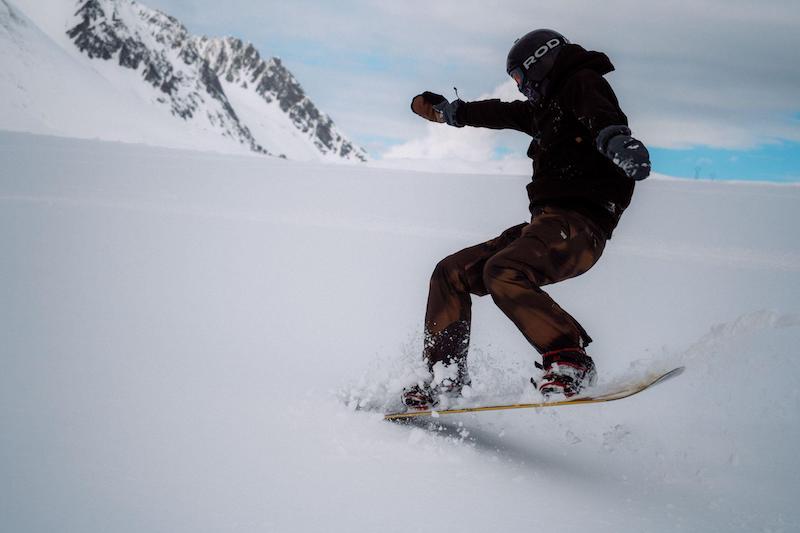
Common Reasons We Catch Edges on a Snowboard and Tips to Fix Them
Through my years of experience as a career snowboard instructor I’ve determined a few common causes for people catching edges on their snowboards.
In this section, we’ll go through a few of those causes and give you some tips to fix them.
Jumping steps in the learning progression
Turning on a snowboard can be defined as sliding down a mountain and changing from edge to edge.
When we’re learning to turn, we change edges in the fall line, i.e., when the nose of the board is pointed directly down the hill. As we get better, we can learn to change the edges before the fall line, and I explain that briefly in one of the sections below.
It is possible to change edges earlier than the fall line and balance over your downhill edge, but that technique comes in much later and definitely not at the beginner level.
With changing edges in the fall line in mind, there are a number of skills that you should have before even attempting turns. Those skills include:
- Strapping into and unstrapping your snowboard on flat ground;
- Moving around on flat ground with one foot attached, i.e., your lead foot (goofy or regular);
- Sliding down a small slope with one foot attached to your snowboard and being able to stop;
- Strapping one foot onto your snowboard on a slope;
- Speed and direction control with one foot attached to your snowboard;
- Speed and direction control with BOTH feet attached to your snowboard.
Once you can do these things you are ready to learn how to turn.
To do a heel side turn on your snowboard, you want to:
- Begin on your toe edge and use your lower body to begin to turn the nose of the board down the hill.
- As the nose approaches the fall line you begin to relax your ankles to make the board flatten against the snow.
- When the nose is completely down the fall line, the ankles should be completely relaxed and the board completely flat against the snow.
- Begin to flex your front ankle to engage the heel edge and continue rotating the snowboarding across the hill onto the new edge, using your lower joints.
- Finish on your heel edge in a relaxed, yet athletic position with equal weight between both legs.
Next, to do a toe side turn on your snowboard, you want to:
- Begin on your heel edge and use your lower body to begin to turn the nose of the board down the hill.
- As the nose approaches the fall line you begin to relax your ankles to make the board flatten against the snow.
- When the nose is completely down the fall line, the ankles should be completely relaxed and the board completely flat against the snow.
- Begin to flex your front knee to engage the toe edge and continue rotating the snowboarding across the hill onto the new edge, using your lower joints.
- Finish on your heel edge in a relaxed, yet athletic position with equal weight between both legs.
With this proper technique spelled out, hopefully you can determine if your issue is one of technique.
Going too slow
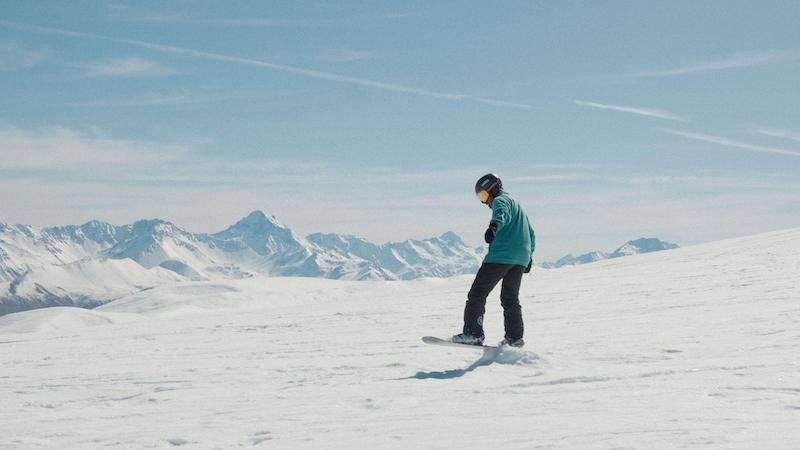
Another common reason that beginner snowboarders catch edges while turning is because they are going too slow.
Snowboarding is a lot like riding a bike in that we need some momentum to stay balanced. We are, in fact, balancing on one point of contact as opposed to two.
Increasing your speed, even slightly, will in fact increase your ability to balance.
Terrain choices – Challenging vs gentle
Too many times I’ve seen snowboarders struggling on terrain that is simply too challenging for their ability level.
Steeper terrain inherently gives us more speed when we turn, which is why we need to be ready for it when we decide to try it. We need to be used to turning with a bit of speed.
In an effort to make a quick turn to manage speed on steeper terrain, snowboarders will often set their downhill edge too early or attempt to “swish” the tail through to make the turn. Both of these actions often lead to catching an edge.
To make turns safely, we want to lead with the front of the board, hence the description above outlining how we either bend the front knee or flex the front ankle to initiate our turns. Trying to do it with a tail movement first can work sometimes, but leaves you exposed to unexpected edge catches.
To solve this issue, I suggest gradually increasing terrain steepness after achieving mastery on simpler terrain. Basically, you need to feel like a rockstar on a given piece of terrain before trying anything steeper.
Take your time, it’s not a race!
I see some snowboarders changing edges before the fall line – How do they do that?
It is possible to change edges earlier than the fall line and balance over your downhill edge, but that technique comes in much later and definitely not at the beginner level.
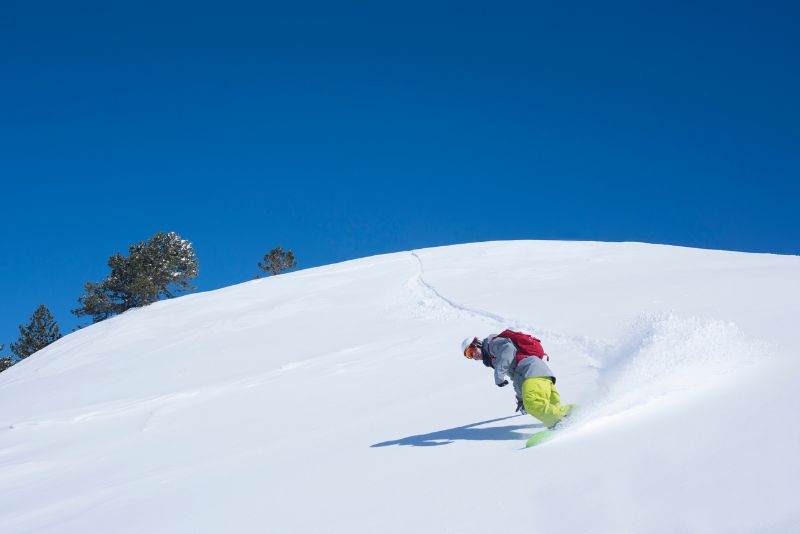
The way that snowboarders do that is by moving their mass inside the turn as they change edges. They do this by moving their hips across the board laterally, from over one edge to the other.
This coordination of moving your mass inside the turn and rolling the board through the edge change with the lower joints results in setting a new edge above the fall line.
It’s a super fun and more controlled way to turn, but you can’t do it without first mastering making turns in the fall line.
Conclusion
There could be a number of reasons you’re catching edges on your snowboard. Those reasons might be due to technique, but they might be due to other factors as well.
If they are technical issues, then some of the common problems and their associated solutions outlined in this article should help you out in your progression.
Whatever the case, I know that catching edges can be really frustrating. Find the reason, work at it, and keep the faith. You will make it automatic and effortless one day, as long as you keep at it!
Enjoy the learning journey through snowboarding!
Read More: Best Snowboards That Prevent Edge Catching