
Learning to snowboard can be challenging, but the reward is so great! There’s nothing like the feeling of gracefully carving your way down a mountain, flying through the air, or floating on top of deep powder.
Learning to snowboard can be even more challenging if you’re using equipment that is too advanced for you. But how do you know what “level” of snowboard you have?
This article will dive into the specs that define whether a snowboard is a beginner, intermediate, or advanced snowboard.
What specs are important in snowboard selection?
Size and width are arguably the most important spec to consider when selecting a snowboard. To learn more about size, read our dedicated guide on How to Choose a Snowboard.
Graphics are important, because it’s important to simply love looking at your snowboard. But beyond graphics, and ultimately more important for the activity of snowboarding itself, are the following considerations:
- Shape
- Flex
- Profile, aka bend
There are tons of other specs, such as base construction, fiberglass layering, sidecut radius, etc., but for the purposes of this article, we’ll focus on the three listed above.
Shape
There are two broad categories of snowboard shape: Directional and Twin.
For an in-depth understanding of the difference between these two categories, check out our dedicated article: Directional vs Twin Snowboards Explained.
In short, directional snowboards are best for all-mountain and freeriding (i.e., riding in deep powder) with an emphasis on riding in your natural stance most of the time, due to having a longer nose than tail and a set-back reference stance.
Twin-shaped snowboards are symmetrical from nose or tail to center and have a centered reference stance. They are primarily built for freestyle riding, i.e., doing tricks, and their shape favours versatility between riding either natural or switch stance.
Flex
Flex is the amount of resistance a snowboard offers when you push on it. Is it stiff, soft, or somewhere in between.
To test the flexiness of a board, simply put its tail on the ground, hold its nose, and push in the center to feel the resistance. All boards will offer some resistance, but some more than others. Try this test on a few different boards to get a feel for it.
I remember riding a board one day that was too stiff for my style of riding. It took so much effort to bend it that I felt like I was riding a piece of plywood. However, it was certainly stable at high speeds. I learned that for my style of riding, which I’d say is more playful than powerful, I’m best served with a medium to soft board.
Profile
The profile of a snowboard is how a snowboard bends. There are four main categories of snowboard profile:
- Camber
- Reverse camber, aka rocker
- Hybrid
- Flat
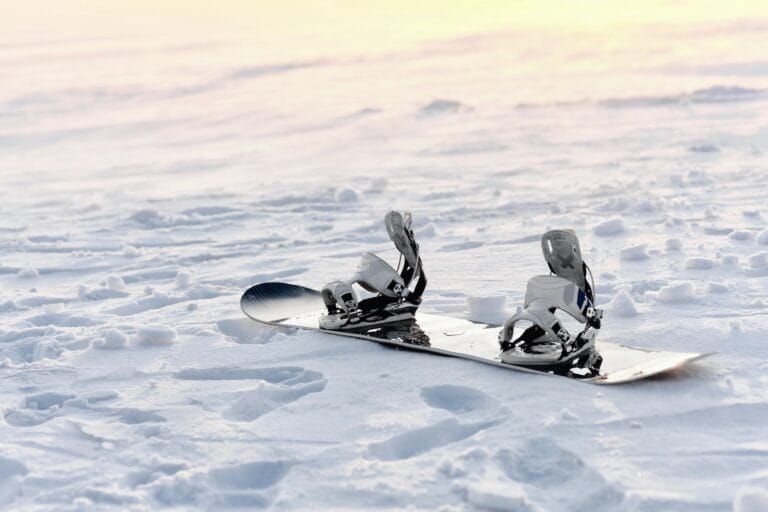
The best way to see a snowboard profile is by placing the board flat on the ground and looking for where the board touches the ground and where it is lifted off.
Camber, aka traditional camber, is when the tip and the tail of the snowboard are touching the ground and the center, or waist, is lifted off the ground. When you push on the center, it bounces back. The tip and the tail want to stay in contact with the flat surface, or when snowboarding, with the snow.
Reverse camber, aka rocker, is the opposite in that the tip and tail want to stay up off the flat surface and the center is the part that stays in contact with the surface.
Hybrid camber, which is used in a large number of boards in varying ways, is a mix of traditional camber and rocker. A very common hybrid profile is traditional camber between the bindings and rocker on the nose and/or tail.
Flat profiles lie completely flat without any part of the board lifting off of a flat surface. They don't bend in any direction.
A snowboard that bends and springs back at you is important for something called “board performance” which can be seen as the “bounciness” between turns that can be generated by a skilled snowboarder.
It takes time to learn how to create board performance and the boards that allow for it aren’t exactly the best boards for beginners. Rocker and/or flat profiles can help to minimize catching edges while turning.
To learn if you’re ready for a board that can deliver board performance or not, read on!
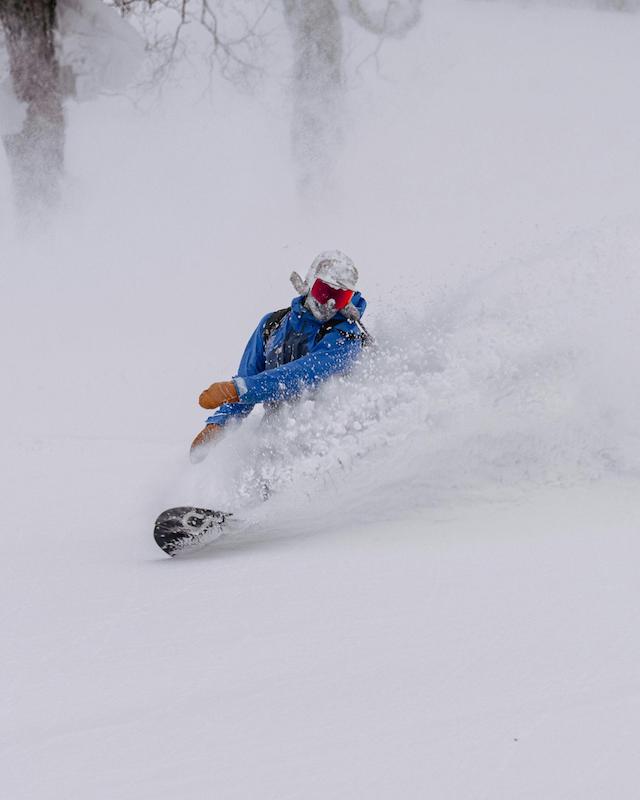
Are you a beginner, intermediate, or advanced snowboarder and which board is best for you?
When thinking about which snowboard is best suited to your skill level, we need to think about your skill set in turning a snowboard.
Questions an instructor would want to know: Are you a beginner, just learning how to turn a snowboard? Are you a novice, still consolidating your ability to make turns happen? Are you intermediate, learning to make short turns and medium turns at a decent speed? Are you high-intermediate or advanced and can carve at decent speeds and handle challenging terrain?
It’s important to ask these questions and be honest with yourself about the answers as those answers are key to choosing the best snowboard to complement your abilities and help you progress.
Once you’ve answered the questions above, read through the following specs to learn what is best for your ability level.
Beginner and novice snowboards
Beginner and novice snowboarders can be well served by boards with a:
- Twin shape;
- Soft flex;
- Hybrid or flat profile.
If going with a hybrid profile, rocker in the nose and tail will help with edge changes. Both flat and rocker can reduce the likelihood of catching an edge if the movements during an edge change aren’t quite consolidated yet.
A twin shape will allow a beginner to versatility as they discover whether they are goofy or regular. It will also allow them to acquire the basics of switch riding.
Intermediate snowboards
Intermediate snowboarders can be well served by boards with a:
- Twin or Directional shape, depending on their level of interest in freestyle;
- Medium flex;
- Hybrid or traditional camber.
Although just about all modern snowboards can be ridden switch, if freestyle and switch riding are a main interest, then a twin shape will serve that snowboarder the best.
If all-mountain riding, such as bumps, trees, and powder are the main interest, then a directional shape would be a good choice.
Medium flex will allow an intermediate rider to begin to experiment with generating board performance, while not having to step up to the demands of an advanced board.
Traditional camber will allow the intermediate rider to generate the most board performance. If carving, going fast, and turning on steeper slopes is of interest, then traditional camber would be a good choice.
Hybrid camber will be useful when it comes to learning basic freestyle tricks, such as nose or tail presses, and will help an intermediate stay afloat in deep powder.
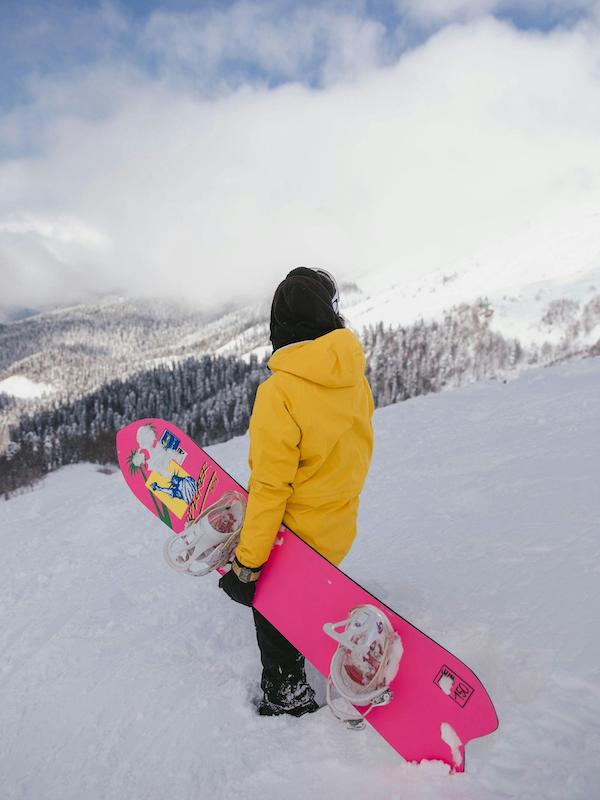
Advanced snowboards
Advanced snowboarders can be well served by boards with a:
- Twin or Directional shape, depending on the area of focus; freestyle, freeriding, or all-mountain;
- Medium to stiff flex;
- Hybrid or traditional camber, depending on the area of focus.
Advanced snowboarders will often have a quiver of boards, each suited to a specific purpose.
A park board will often have a twin shape, medium to stiff flex, and traditional camber so as to generate maximum board performance.
A powder board will have a directional shape, medium to stiff flex, and hybrid camber to deliver performance while keeping the nose afloat in deep conditions. Some powder boards will have specially shaped tails with cutouts, such as swallow-tail boards, to aid in sinking the tail and lifting the nose. Other shapes include tapered tails where the tail is narrower than the nose.
All-mountain boards will often be directional, medium to stiff flex, and hybrid or traditional camber. Traditional camber will allow for maximum board performance, whereas rockered noses will allow for smooth edge changes. At this point, it truly comes down to personal choice.
The trademarks of advanced snowboards are the presence of traditional camber and stiffer flex. It takes a refined skill set to bend and unlock the power that this type of snowboard can deliver.
Conclusion
Learning to snowboard is so much fun and can be made even more fun when paired with the right equipment.
Knowing your own ability level is the first step in choosing the best equipment to maximize your progression.
Board shape, flex, and profile along with size and width are the key specs to understand when choosing a board.