
If you’ve ever walked into a snowboard shop or signed up for a lesson, one of the first questions that is asked of you is, “What level of snowboarder are you?” This often elicits a response of “ums” and “ahs.”
As a career snowboard instructor, I know how to gauge someone’s proficiency level just after seeing a few turns or even after asking a few questions.
To help you gauge your own proficiency level, in this article I’ll run through some of the types of terrain and different maneuvers that snowboarders at each proficiency level can typically do.
The different levels in snowboarding.
The different levels in snowboarding correspond to a snowboarder’s ability or proficiency to do/ride the following:
- Terrain difficulty, i.e., green, blue, black, double black
- Terrain type, i.e., groomed runs, ungroomed runs, tree runs, park, powder
- Maneuvers, i.e., sliding turns, carved turns, etc.
- Speed, i.e., beginner to expert speed
Beginner
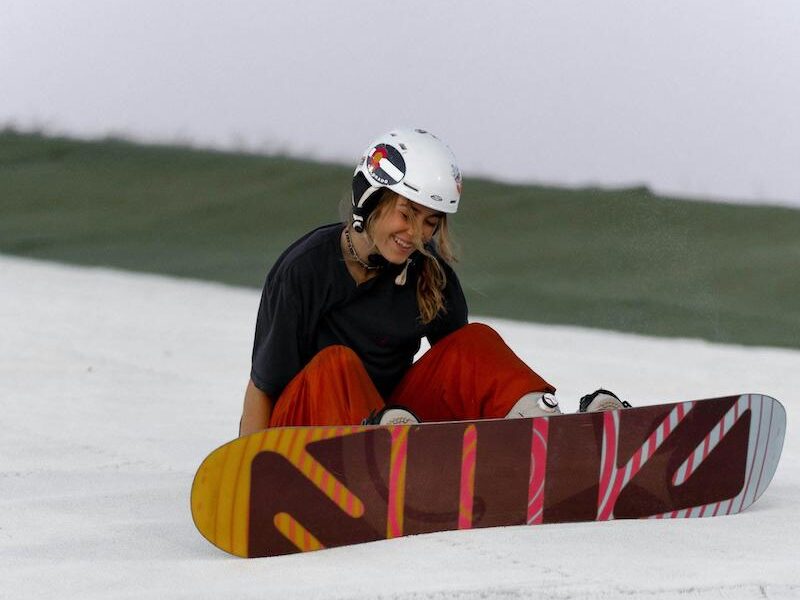
Beginners may be trying snowboarding for the first time or may have already had a few tries.
New riders remain beginners until they can link turns together on both sides with both feet attached to the snowboard. That is, they can change edges in the fall line from one edge to the other.
Beginner riders should stay in a learning area while they learn the basics of balance and, speed and direction control. They should begin by learning one-footed control on flat ground, progress to one-footed control on a slight slope, and then learn both speed and direction control with two feet attached to the board.
Challenge levels while learning these basics can be decreased or increased by changing the angle of the terrain from flat to slightly inclined.
Once they can successfully link turns, they have graduated to become novice snowboarders.
Read More: Best Beginner Snowboards
Novice
While remaining fairly stiff and possibly lacking some timing and flow, novice snowboarders have acquired the skill of linking a number of turns together on very simple terrain.
Refinements can be made by learning how to control the size and shape of their turns, i.e., bigger or smaller and closed or open, meaning bringing the nose across the hill after every turn or keeping it pointed more down the hill.
Novice snowboarders should learn these skills in a dedicated learning area before venturing out onto the regular slopes.
Intermediate
There is so much progression at the intermediate level and this is a really, really fun stage in snowboarding because snowboarders are ready to explore beyond groomed runs!
Intermediate riders have consolidated the skill of changing edges and have good control over their speed through the shape and size of their turns.They have the skills to try to initiate their turns before the board goes down hill.
They are ready to begin exploring steeper slopes, i.e., blue and easy black, and different types of terrain and maneuvers, i.e., ungroomed terrain, powder, basic freestyle.
Ungroomed terrain can include bumps, tree runs, and powder. Basic freestyle maneuvers can include ollies, small jumps, and nose and tail presses.
They’re also ready to refine their turns to the point where they can learn basic carving, i.e., leaving a pencil line track in the snow vs a wider sliding track, and begin to experiment with board performance, i.e., bending their snowboards to create energy and release that energy into the next turn.
Advanced
Advanced riders have a refined ability to change their edge and can experiment with the way they turn to match the type of terrain they’re riding. For example, turning while absorbing terrain at the same time, which is good for steep or bumpy terrain; or changing edges while coming across the hill and not just down the hill, which is good for speed control and generating board performance.
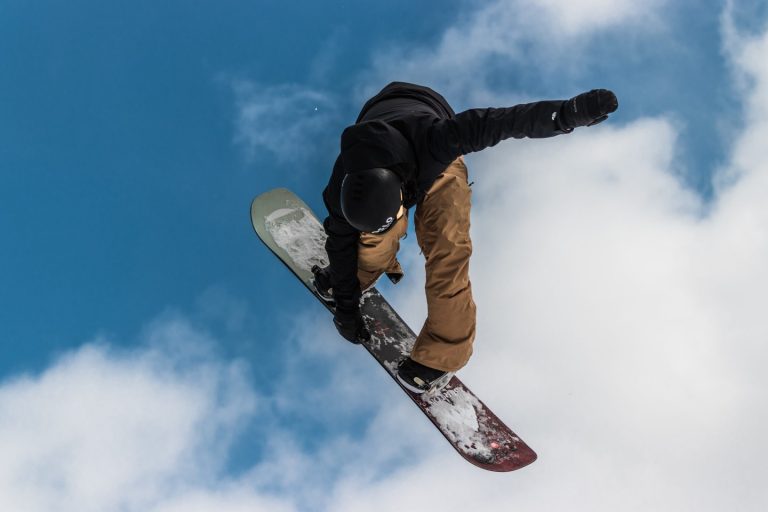
Advanced riders are comfortable getting air off jumps and bumps and can likely add rotations into airs.
They can control their speed well on expert terrain, blacks and double-blacks, through the use of different turn sizes and shapes. They can carve really well and their riding looks alive and bouncy, due to the ability to create board performance.
They can ride all types of terrain and conditions, including park, trees, powder, groomed, and ungroomed terrain.
Expert
Expert riders can ride expert slopes in challenging conditions and adapt their turns and maneuvers to match whatever they encounter.
They can do this anywhere on the mountain and in any terrain, including double-black diamond steeps, and they can do all this at expert speeds.
Progression comes from trying creative maneuvers in challenging terrain.
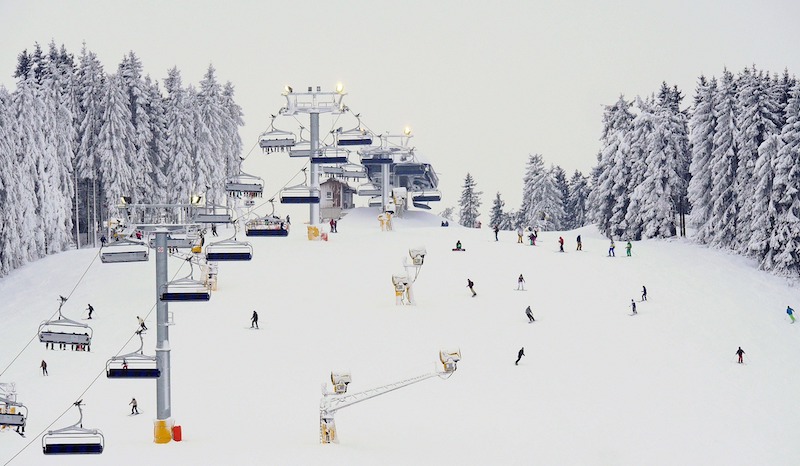
How do we get better at snowboarding?
The simplest answer to how we acquire snowboarding skills is: we go snowboarding!
Riding with friends, using video, and getting a coach or a lesson are all ways to accelerate learning, but underpinning it all is time spent on snow.
Skill acquisition model
There are several different theories out there describing how we learn things in sports. As a career snowboard instructor trained by CASI (Canadian Association of Snowboard Instructors), I lean on the following model developed by the Coaching Association of Canada:
- Initiation
- Acquisition
- Consolidation
- Refinement
- Creative Variation
We can apply this to learning to turn for the first time or learning our first 360° spin off of a jump.
First we need to hear about, see, or try something for the first time; this is initiation. Then we need to practice it, and we might make a bunch of mistakes while learning, and this is acquisition.
Once we can get the thing we’re trying most of the time, we can call it consolidated. When we get it all of the time, including in challenging conditions, it’s refined.
When we can put our own flavor on it, make decisions that add some style and flow and make it ours; this is creating variation.
Riding with friends – more than just good vibes
Instructor Insight: One of my favorite things to say about snowboarding is that it’s a solo sport best enjoyed with friends. It is scientifically proven that riding with others helps us progress faster.
When we see our friend do something impressive, of course we’ll want to try it! And when we want to impress our friends, we’ll find the courage to push ourselves beyond our comfort zone and learn something new.
This external motivation can go a long way to progressing our skills. Speaking of external motivation, signing up for local competitions is a great way to fuel progression.
Even stronger than external motivation is internal motivation. This is your inner drive to get better. This is you creating an image you want to achieve in your mind and then putting in the work to make it a reality. This can be done with friends or on your own, but again, snowboarding is a solo sport best enjoyed with friends. It always feels good to get a high five when you do something for the first time!
Using video
A picture is worth a thousand words, and moving pictures are worth even more. There is no better way to understand your body position or movements than to see it on video.
Video allows us to see what is working well and what we need to change to make it work even better. It gives us immediate feedback and it gives us self feedback. Immediate feedback is the best way to fuel progression.
Getting a lesson
Hiring a coach and having a pair of external eyes on you is probably the best way to progress that exists. Coaches know which movements work and which don’t.
Coaches also know how to push you just enough to keep you in the sweet spot just beyond your comfort zone and without pushing past the danger line.
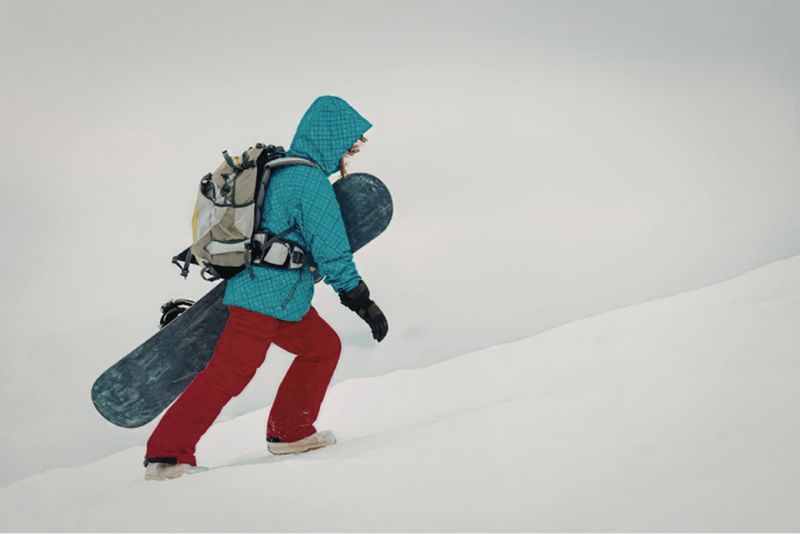
Does equipment help a snowboarder progress?
The answer is yes and no. You can’t buy an advanced set up and expect it to make you an advanced snowboarder. In fact, investing in equipment that is too advanced for your ability can hinder your progression. To learn more, read Is Your Snowboard Too Advanced for You?
On the flip side, it’s possible that your board is not advanced enough to allow you to progress.
Conclusion
After reading the descriptors above, you should be able to answer the question, “What level of snowboarder are you?” You should also have a good idea on how to progress your current skill set to work towards upping your proficiency level.
It’s important to know what kind of equipment you’re riding and whether it is helping or hindering your progression.
The best advice I can leave you with is to get a crew of friends, grab a video camera, find a coach if you can, and go snowboarding!