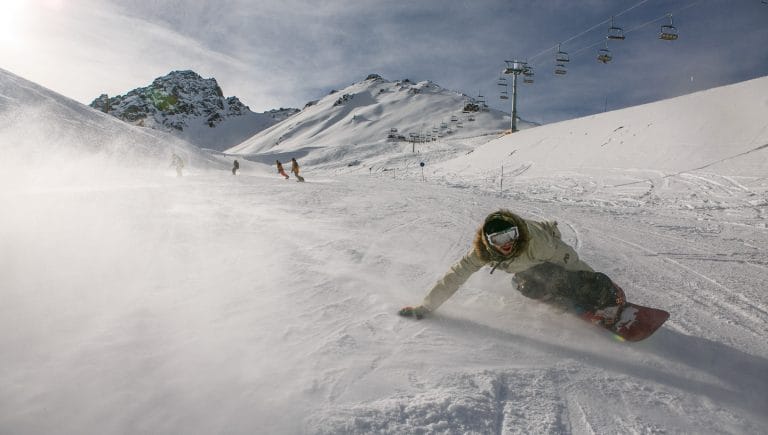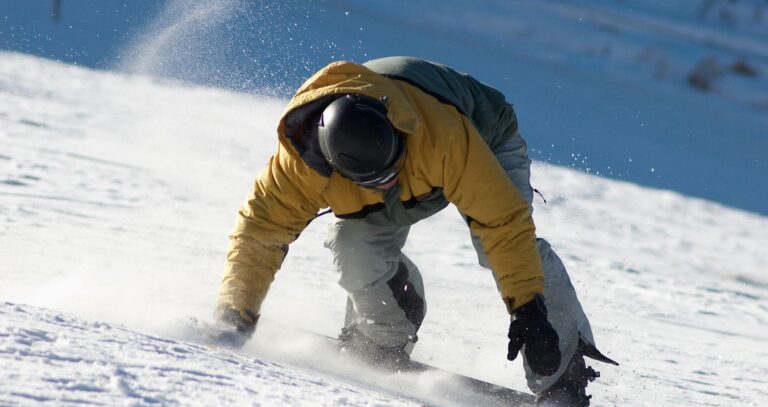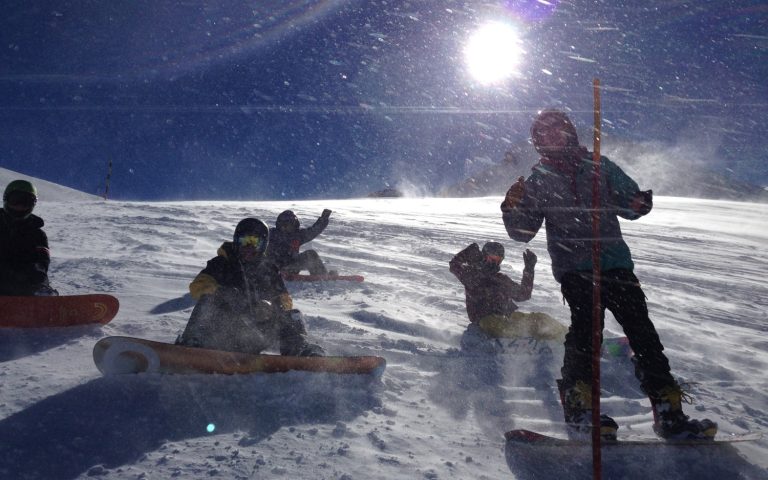

Knowing how to stop on a snowboard is a key skill for any beginner learning to snowboard. Not only will it help you to stop but it is also a real confidence boost knowing that, at any moment you can apply the brakes.
Riding on the mountain can be unpredictable. There are other skiers and snowboarders, obstacles, trees and barely hidden rocks that need to be avoided. Sometimes turning to avoid them is impossible and so we need to stop in a hurry.
This article will teach you the mechanics of how to do so safely and with control.
Why Learning How to Slow Down and Stop on a Snowboard Is Essential
Riding fast is fun. I get it. But when we get to the bottom of a run, or if something unexpected pops up in front of us, we need to be able to slow down and stop with control.
Being able to slow down will also help you progress faster and learn new skills. Mastering the technique below can also help you to avoid catching edges. You’ll also need to know how to slow down and stop when riding on narrow tracks when there’s not much room to maneuver and use turns to control our speed.
When you progress to jumps and tricks you’ll need this same technique to be able to scrub off some speed before hitting the jumps, rails or boxes.
The basic mechanics of stopping on a snowboard
This technique uses a load of upper and lower body separation and counter-rotation, which is great stepping stone along the way to learning a bunch of other snowboard moves. This basic techniques is also an integral part of shifties, board slides, powder slashes and tweaking out grabs to name just a few!
Basically to get your board to stop, you need to get it turned 90 degrees to the slope of the hill so that the tip and tail of the board are facing perfectly across the hill. You also need to put some pressure through the edge of the board. The edges grip into the snow and push some snow forward, down the hill. This is what slows you down.
Normal turns vs. quick stops
You can get the board to 90 degrees just by doing a normal turn, but the problem with this is that you will continue to travel across the hill. This can be a problem if you are trying to stop amongst a bunch of people such as at the bottom of the lift where crowds can build up.
Instead of performing a normal turn, you need to be able to rotate your board 90 degrees without creating any movement across the hill.
Counter-rotation is the key to stopping on a snowboard
We'll get to the steps on how to stop soon, but the key to this technique is using counter rotation to push the board around.
You can do this move either on the toe or heel edge of your board, but we will start with the heel edge as this is often the easiest and most useful for riders.
Stopping On Your Heel Edge
Open your shoulders to create core tension
First, open up your upper body by rotating your shoulders towards the front of the board as if you are reaching forward with your back hand. This creates a tension in the core of your board between your shoulders and your hips which we can use to force the board to rotate.
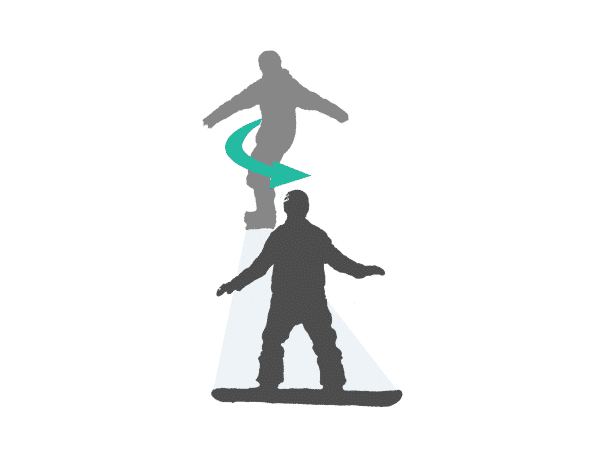
Kick the tail out whilst on your heel edge
Next rock your board slightly onto your heel edge then counter rotate your upper body back and push your back foot forward, punching your heel edge into the snow.
Practice this a few times by flat basing straight down the slope for a few meters then see if you can slow down and stop without the board traveling across the hill.
Stopping On Your Toe Edge
Slowing down and stopping on your toe edge follows the same principles as on your heel edge but is a little trickier. Having said that though, once you’ve got the toe edge stop down pat, you can actually stop a lot harder and faster than on your heel edge.
Close your shoulders to create tension
Start by rotating your shoulders to the tail of the board, before leaning lightly onto your toe edge.
Push your back foot out on the toe edge
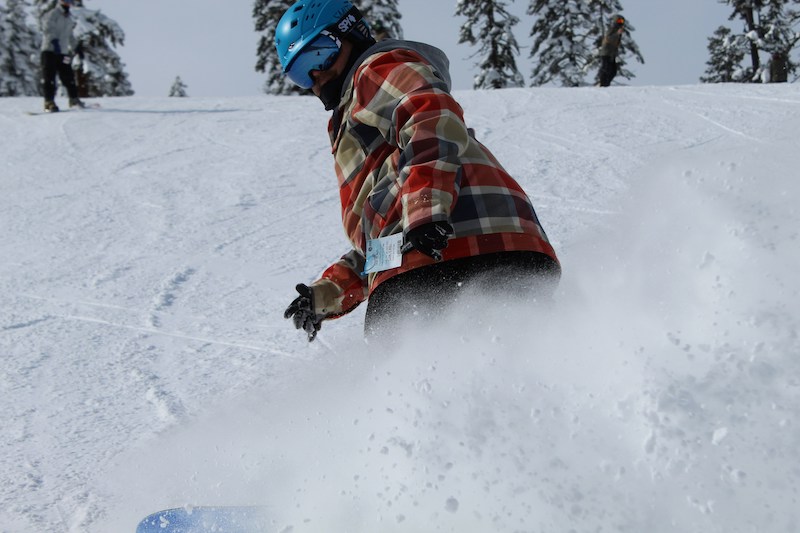
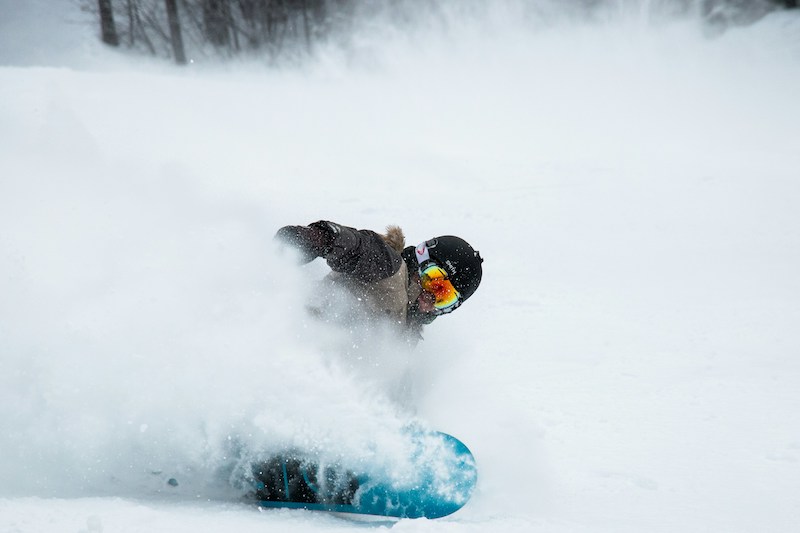
Then use your counter rotation same as the heel edge turn, but this time push to rotate your hips down the hill so that you are facing up the hill. With the toe edge stop you can really lean hard onto the toe edge and push your toes into the snow. This will bring you to a stop quickly and chuck a load of snow up into the air.
Once you get good at this you can do a white room which is when you fire a load of snow into the air before doing the whole move in reverse and riding back through your cloud of snow.
Conclusion
Getting comfortable with slowing down and stopping on demand is the ultimate game-changer for your snowboarding. Once you know you can slam on the brakes whenever you need to, the fear disappears allowing you to ride steeper terrain, navigate tight cat tracks, and thread your way through crowded lift lines with total control.
Remember, don't rush the movement. Start on a mellow green slope, focus on smooth counter-rotation rather than brute force, and get comfortable committing weight to both your heel and toe edges. Master this skill now, and you'll find that advanced moves come much more naturally down the line.
Grab your board, find a safe patch of snow to drill both sides, and we’ll see you out on the slopes!