
Just as there isn’t one single style in snowboarding, there isn’t one definition of what style is in snowboarding. In this article, I’ll begin by sharing my version of its definition.
I believe snowboarding is just as much art as it is sport. We, as snowboarders, are all artists and we each express our art in unique ways. The mountain is our canvas and the brush strokes are our turns and maneuvers. Style is how and where we choose to make those brush stokes to create our unique way of coming down the mountain.
What follows in this article is a few common terms used to describe various forms of style in snowboarding. The list of terms is by no means exhaustive, but it should give you an idea of how to qualify styles of snowboarding you see and even to describe your own.
At what level can a snowboarder create style?
I’d argue that a snowboarder needs to be able to turn consistently to begin to create style. That means that a snowboarder needs to be at least a low-intermediate rider to begin to create a unique style.
If you’re not sure what level of rider you are, read our dedicated article on the topic, “What Level of Snowboarder Am I?”
Once a snowboarder progresses beyond low-intermediate towards true intermediate and begins to explore varied terrain, they can access terrain and maneuvers which allow them to make creative decisions.
What are the elements of style in snowboarding?
The main elements that make up style in snowboarding are:
- The type of terrain a snowboarder likes to ride, and;
- How a snowboarder rides that terrain.
Keep reading for a breakdown of the most common terms used to describe these elements.
What is my riding style?
One of the elements which describes a snowboarder’s riding style is the type of terrain they like to ride.
Type of terrain is important to understand, because snowboards are designed to match specific types of terrain and snowboard manufacturers group their snowboards into categories to match these different “riding styles.”
What follows is a list of the most common types of terrain used to define riding style.
Resort Riding, Slackcountry, and Backcountry Touring
These terms describe where snowboarding happens and how it is accessed.
Resort riding is arguably the most common riding style that exists in our beautiful sport. Resorts are where snowboarders can access lessons, find food and accommodations, and they are built for the masses.
Resort riding happens in-bounds at a mountain resort, aka ski hill, on both groomed and ungroomed runs. It is accessed through mechanized lifts, such as chairlifts, t-bars, gondolas, etc.
A snowboarder that considers themselves a resort rider will ride just that, in-bounds at a resort. This is a very general term, so keep reading to find out how to make it more precise.
Slackcountry is out-of-bounds riding accessed through in-bounds mechanized lifts. In this style, snowboarders take a gondola to the alpine and then access out-of-bounds terrain through specific backcountry gates. Riders engaging in slackcountry must be prepared with appropriate equipment, supplies, and knowledge.
Backcountry touring is similar to slackcountry; however, the terrain is not accessed through a resort. It is accessed via logging roads, highway stops, etc. and then hiked into. There’s a saying that says when you go touring you “earn your turns.” Just like slackcountry, riders must be prepared with appropriate equipment, supplies, and knowledge.
Although a pair of snowshoes and a powder or freeride board can work, both slackcountry and backcountry are best served with splitboards. Splitboards are specialized boards which can split into skis for ascending and be put back together into snowboards for descending.
Read more about splitboarding here.
Snowboarders who consider their riding style to be mostly slackcountry or backcountry use this kind of equipment, ride out-of-bounds, and must be equipped with the knowledge to keep themselves safe.
All-mountain and Freeriding
These two terms are important to know, as they are two specific categories of snowboards designed by most snowboard manufacturers.
All-mountain snowboards are designed to ride in the alpine, in trees, on groomers, in bumps, and in powder; all over the mountain, just as the name describes.
A snowboarder who considers themselves an all-mountain resort rider will ride anything and everything within resort boundaries.
View our recommended All-mountain boards here.
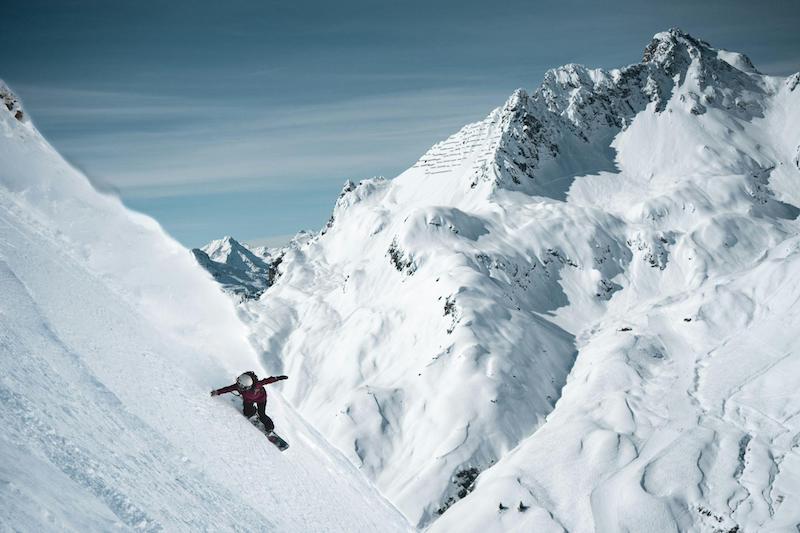
When we use or hear the term freeriding, we picture big-mountain alpine descents and rightly so. Although it often does, freeriding does not necessarily mean only powder. It includes complex, sometimes icy, and often steep terrain. Although freeride boards can handle it, freeriding doesn’t generally include groomed terrain.
A snowboarder who considers themselves a freerider is all about big-mountain descents, within or outside of resort boundaries. Freeriding, as opposed to backcountry touring, can be accessed by mechanized vehicles such as lifts or gondolas within resort boundaries, or snowcats and helicopters out-of-bounds.
Carving
There are two main categories of turns in snowboarding:
- Sliding turns, where the track left in the snow is wide because the nose and tail follow slightly different paths, and;
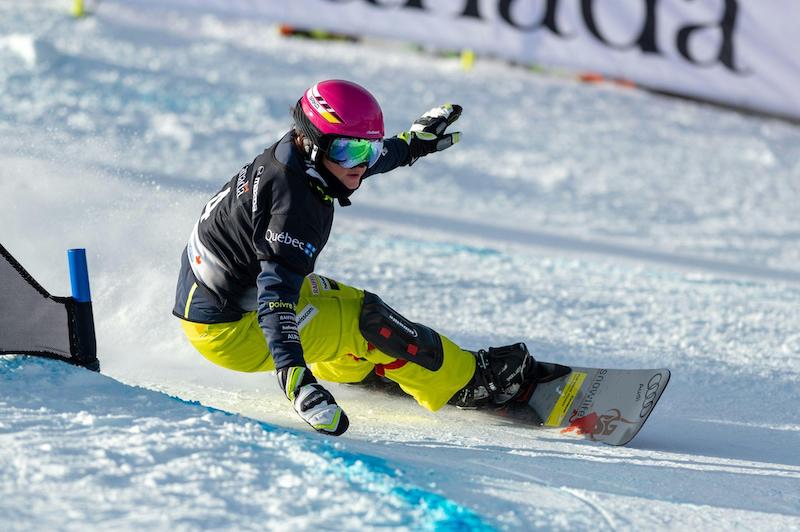
- Carved turns, where the track left in the snow is as thin as a pencil line because the nose and tail follow exactly the same path.
Carving is a skill that we learn at the intermediate level and it is so much fun! It is the best way to keep speed, is incredibly efficient in terms of conserving energy, and is pure pleasure when used to draw elegant lines down a slope.
Carving requires strong technical skill and people who consider themselves “carvers” will spend the bulk of their time on groomed runs within resort boundaries.
View our recommended Carving boards here.
Powder
Powder riders go snowboarding to chase one feeling; the feeling of floating.
Powder can be found in and out-of-bounds, in the alpine, on open runs, or in the trees. Wherever it snows a ton, think West Coast North America, Japan, etc., powder riders will flock.
I’d argue that every snowboarder loves the feeling of floating on powder; there’s nothing quite like it. However, powder riders are purists who pick and choose their snowboarding days based on weather patterns and don’t necessarily go out unless there’s fresh powder.
View our recommended Powder boards here.
Freestyle, Park & Street
These riding styles are all about tricks. Tricks can include:
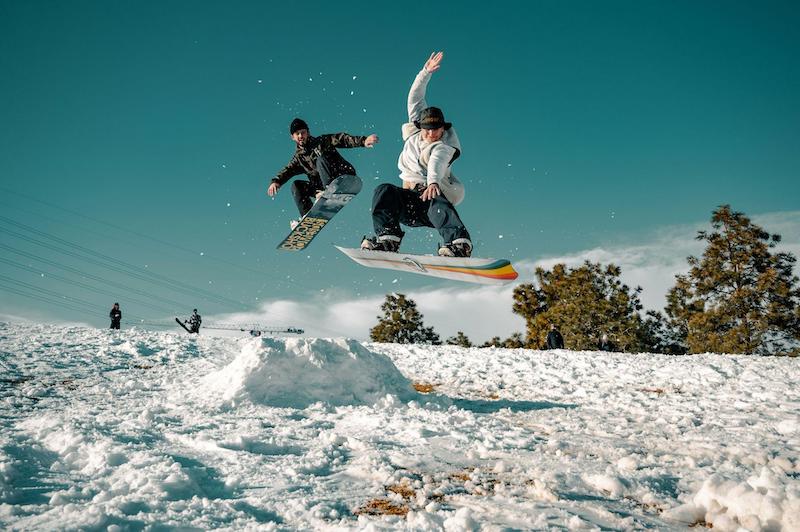
- Airs, including rotations and grabs;
- Flatland and buttering, i.e., nose and tail presses, with or without rotations and everything in between.
- Jibbing, i.e., riding over, tapping, or balancing on non-snow obstacles such as boxes, rails, tubes, tree stumps, fallen trees, or whatever else imagination allows.
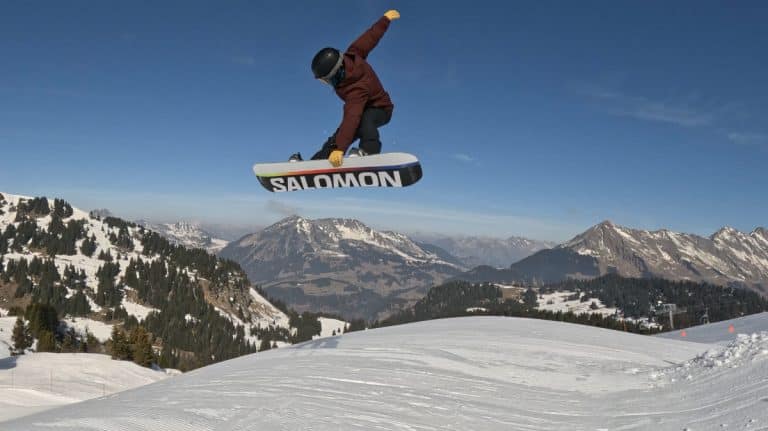
Freestyle snowboarding is an all-encompassing term where tricks are done anywhere and everywhere on the mountain, including in the park.
Park riding is reserved to doing tricks in terrain parks over man-made jumps and obstacles, such as boxes and rails.
Street snowboarding is done in urban environments. It involves creatively using things like buildings, staircases, etc. as obstacles to do tricks on.
View our recommended Freestyle boards here.
Common terms to define style in snowboarding
After defining where a snowboarder likes to ride, the next element we can describe is how they ride that terrain.
What follows are some common terms used to define the different riding styles a little bit further.
Playful or Creative Snowboarding
The hallmark of playful or creative snowboarding is surprising the audience. It’s allowing intuition and creativity to drive the selection of tricks or placement of tricks and turns in different places.
Playfulness and creativity can be brought into any of the riding styles mentioned above. Again, the tell-tale sign is that it catches the audience off-guard and makes them go “Wow!”
Powerful or Hard-Charging Snowboarding
This style is paired with speed, confidence, and strength. Imagine a snowboarder descending a complex slope weaving through obstacles without hesitation. This is powerful or hard-charging snowboarding.
This style is often attributed to freeriding or all-mountain riding and is often done through “gnarly,” i.e., challenging and consequential, terrain.
Graceful or Smooth Snowboarding
A synonym for this style of riding is “steezy.” In carving it can refer to the execution of turns. In freeriding it can refer to the choice of line down a slope. In freestyle, it can refer to the execution of tricks.
Ultimately, it refers to making snowboarding look effortless and this term can be applied to any riding style.
Dynamic Snowboarding
Dynamic snowboarding refers to the presence of board performance and high-energy. Snowboarders who ride dynamically use their full range of motion in a variety of turn shapes to bend their snowboards, load energy into them, and then release it into the turns that follow.
Dynamic is a term that is often used to describe all-mountain riding or carving. If a snowboarder is moving through their full range of motion through every turn, we can say that their snowboarding is dynamic.
Conclusion
Riding styles are many and all are different faces of the prism of snowboarding. Although it can be limiting to label yourself with one riding style, we all have a preference that can be defined.
So what is your riding style? Are you a purist or do you cross-over? Are you an all-mountain freestyler who rides creatively and gracefully down gnarly slopes?
What’s beautiful about the art that is snowboarding is that we can even bring that art into the descriptions of our style! Now that you’ve read this article, you’ll be able to string together some common terms to describe your own riding style or the style you like to watch the most.